Antimony is a silvery metalloid designated as critical to U.S. economic and national security, yet it remains relatively unknown compared to other critical materials like rare earth elements or cobalt. This summary explores antimony’s properties, current applications, emerging uses in battery technology, and the global production landscape dominated by China.
What is Antimony and Why is It Critical?
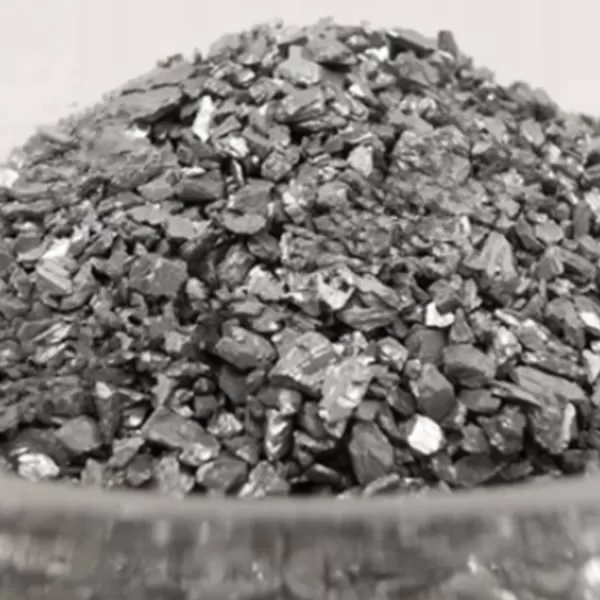
Antimony (Sb) is a metalloid extracted from the mineral stibnite (Sb2S3) and valued primarily for its ability to harden and strengthen metals.
- Flame retardants (leading use as of 2020)
- Lead-acid batteries
- Alloying material for strength and shielding
- Antifriction alloys
- Military applications: night vision goggles, explosives, flares, nuclear weapons, infrared sensors
Emerging critical use: Antimony is increasingly important in liquid metal batteries (LMBs), an emerging grid-scale energy storage technology. LMBs incorporate antimony in the cathodic material and offer advantages over lithium-ion batteries—longer life cycles, higher current density, simpler manufacturing, no self-ignition risk, and lower production costs. As renewable energy adoption accelerates, demand for grid-scale storage will likely make LMBs and antimony increasingly significant.
Global Production and Market Dynamics
China dominates global antimony production, though its share has shifted considerably:
| Metric | Details |
|---|---|
| China’s market share (2011-2015) | 75-83% of global supply (~115,000 MT in 2015) |
| China’s market share (2020) | ~53% (~80,000 MT) |
| Key reason for decline | Crackdown on illegal mining and environmental enforcement; legal producers fell from 400 to ~16 companies |
| Global supply now sourced from | Russia (30,000 MT), Tajikistan (28,000 MT), Burma (6,000 MT) |
China’s dominance extends beyond mining—it controls the majority of global antimony processing facilities, meaning even antimony mined elsewhere flows through Chinese processors. This concentration ensures 79% of U.S. antimony imports come from China, creating vulnerability to Chinese policy shifts.
U.S. Production Challenges
The United States has no domestic mining production as of 2020; all antimony supply comes from recycling spent lead-acid batteries.
Key barriers include:
- Environmental concerns: The Stibnite Gold mine in Idaho (historically the largest U.S. producer) ceased operations in the mid-1990s due to river ecosystem damage risks
- Commercial viability: Restoration and restart remain uncertain despite renewed interest in supply diversification
- Domestic deposits exist in Idaho, Montana, Utah, Arizona, and Alaska but remain underdeveloped
U.S. users must rely on imports for the foreseeable future, likely for “at least the next several years.”
Supply Risk and Price Volatility
Chinese policy decisions directly impact global antimony pricing. Between 2011–2012, antimony prices doubled following China’s crackdown on illegal mining; another price spike occurred in early 2021. This supply concentration poses strategic risk:
- Industry consolidation amplifies price volatility
- Growing demand from emerging battery technologies increases pressure
- Policy instability in China (mining restrictions, environmental enforcement) cascades globally
Developing U.S. production capacity remains a priority but requires sustained investment and environmental regulatory clarity.
Frequently Ask Questions
How to Import Antimony? – Documents and Steps
- TSCA and EPA: Bulk chemical substances and certain metal compounds may be subject to reporting, declaration, or pre‑notification requirements under the Toxic Substances Control Act. If the imported antimony substance is not on the applicable TSCA lists or is subject to a specific TSCA restriction, you may need to follow TSCA import rules or submit notices. Confirm TSCA status early with the EPA guidance and the TSCA Compliance Guide.
- Safety Data Sheet (SDS) and Certificate of Analysis (CoA): Required by many buyers, carriers, and downstream users for hazard communication and specification verification.
- Certificate of Origin: Needed for duty assessment and for any preferential trade program claims.
- Any export controls or country-specific export bans: check origin country export controls (example: recent export restrictions on critical minerals have affected some supply chains).
- Other agency rules: depending on use and compound (e.g., agricultural, pharmaceutical, or food-contact uses), additional agency permits or registrations may apply.
Typical shipping forms
- Commercial invoice (describes goods, value, seller/buyer, HS/HTS number).
- Packing list (weights, package counts, dimensions).
- Bill of lading or air waybill (carrier document and title).
- Certificate of Analysis (CoA) and SDS (safety and quality verification).
- Certificate of Origin (for duty/preference claims).
- Customs bond and importer of record documentation (EIN/IRS number or CBP-assigned number).
- Importer Security Filing (ISF or “10+2”) for ocean shipments, filed before loading.
Timeline Expectations
- Express courier (FedEx, UPS): many compliant small shipments clear in 24–72 hours.
- Air freight: plan for 1–5 business days for clearance absent inspections.
- Ocean freight: allow several days for port handling plus 2–7 business days for customs clearance on routine entries; if an inspection, missing paperwork, or interagency review is required, clearance can extend to weeks. Start pre-arrival filings (ISF for ocean), prepare formal entry documents, and engage a customs broker to avoid common delays such as missing CoA, incorrect HTS classification, or late ISF filing. Free time at port and demurrage can add cost quickly if arrival-to-clearance is prolonged.
What type of Antimony purity grades are available?
- 3N means 99.9% pure (one decimal nine).
- 4N means 99.99% pure (two decimal nines).
- 4.5N (also written 4N5) means 99.995% pure.
- 5N means 99.999% pure.
This shorthand is widely used across metals and chemical industries to communicate trace-impurity levels compactly; intermediate forms such as “3N+,” “3N5” or “4N5” are common when a product falls between whole N steps. For many industrial antimony applications (lead alloying, flame retardant production) 3N to 4N grades are typical; electronic, semiconductor, or optical uses may specify 4.5N or 5N. For a plain numerical statement on “nines” notation, see a clear industry explanation of the nines system.
What is the common impurities and specification limits on CoA?
Certificates of analysis for antimony list trace elements that typically affect performance and price. Common impurities reported and the typical ways they appear on a CoA are:
- Arsenic (As) — often the most common deleterious impurity and reported in ppm or percent.
- Lead (Pb) — relevant for alloying applications; limits matter for downstream lead processing.
- Bismuth (Bi) — can be present at ppm levels and affects melting/working properties.
- Copper (Cu), Iron (Fe) — typical metallic contaminants reported in ppm.
- Sulfur (S) and Tin (Sn) — can appear depending on feedstock (stibnite concentrates).
Specification limits vary by grade: for example, a 4N (99.99%) material allows roughly 100 ppm total impurities, whereas 5N (99.999%) implies about 10 ppm total impurities. A CoA should show both individual element limits (ppm or %) and the analytical method used (ICP-OES or ICP-MS is standard). For manufacturer grade pages and example CoA formats, consult reputable suppliers that publish product specifications and lot CoAs.
Click here for High-purity antimony product examples
What purity qualifies as the best grade antimony?
The definition for “Best” grade depends on the intended applications. For bulk industrial uses such as flame retardant production, lead alloys, and many chemical processes, 99.9% to 99.99% (3N to 4N) antimony is commonly acceptable and cost‑effective.
For semiconductor, epitaxy, advanced photonics, laboratory evaporation sources, and other applications that demand ultra‑low trace impurities, 99.999% (5N) or higher is considered the best grade.
How Does the grade of Antimony translates to performance?
- Industrial processing: Impurities at the 0.01% to 0.1% level (100 to 1000 ppm) rarely affect bulk chemical performance and keep cost lower.
- Electronics and research: Even single‑digit ppm or ppb impurities can alter electrical, optical, or crystal growth outcomes, so 5N (99.999%) or better is specified.
How to Verify on the Purity of Antimony?
- Don’t rely on the label alone. Require a Certificate of Analysis showing individual impurity limits and the analytical method (ICP‑MS or GDMS are typical for ppb/ppm verification).
- Ask whether the quoted 5N means 99.999% minimum or a guaranteed analytical result on the supplied lot. Some vendors offer 5N as a nominal grade while higher‑precision lots carry lot‑specific GDMS reports. (nihonseiko.co.jp)
What is the Cost versus Benefit of Antimony?
- Higher “nines” increase price nonlinearly. Only specify 5N+ when your process tolerances or downstream quality control justify the extra cost and lead time. For many manufacturers, 4N5 (99.995%) is a pragmatic compromise between purity and price.
In short: choose 3N–4N for most bulk industrial needs and 5N (or better) for semiconductors, precision research, and applications where ppb‑level impurities matter. Verify by CoA and preferred analytical methods before purchase.
How to Find antimony suppliers and distributors worldwide?
Manufacturer, distributor and trading house differences
Manufacturers (refiners and smelters) produce antimony metal and compounds from ore and typically supply bulk lots, technical datasheets, and lot-specific Certificates of Analysis. Buying direct from a manufacturer is best when you need consistent chemistry, large volumes, or primary‑source traceability. Distributors buy finished product from refiners and hold inventory for faster delivery and smaller MOQ (minimum order quantity); they add value through packaging, local warehousing, and commercial terms suited to smaller industrial buyers. Trading houses or brokers act as intermediaries who can source multiple grades or origins quickly and arrange logistics, but they may not hold inventory or provide primary CoA traceability unless they coordinate testing. For high‑value or high‑purity purchases, prefer manufacturers or distributors that will supply a lot‑specific CoA and agree to third‑party testing.
Best directories and B2B marketplaces to search
Start with reputable industry directories and specialist metal marketplaces where corporate identity, product specs, and buyer reviews are accessible:
- USGS and mineral yearbooks for producer country lists and national producers.
- Industry marketplaces and supplier directories such as Made‑in‑China and manufacturer product pages for Chinese refiners (common for antimony trioxide and ingots).
- Commodity and metals market intelligence providers (Metal Bulletin/Fastmarkets, ICIS) for pricing context and verified supplier leads.
- Large global B2B platforms (e.g., Alibaba) can surface suppliers but always verify CoA, business license, and references.
When using marketplaces, require scanned business licenses, industrial CoA, and a third‑party lab report for unfamiliar sellers before payment or shipment. - Professional Sourcing Agents with connections to direct Antimony Mines and Refiners.

Contact Us Form for Inquiries
Regional sourcing considerations and export controls
China remains the dominant producer and processor of antimony, so many global supply chains rely on Chinese refiners; Russia and a few other countries also produce meaningful volumes. Policy shifts and export licensing can change availability rapidly, so check current export controls and licensing rules for the origin country and for your destination. For example, recent policy moves have introduced licensing and export restrictions on certain critical minerals and antimony‑related shipments, affecting lead times and the need for export permits or end‑use declarations. To reduce risk consider dual sourcing from nonrestricted regions, keeping buffer inventory, and working with customs experts to confirm export/import licensing and any sanctions or end‑use controls before contracting.