The global appetite for sustainably produced, exemplary charcoal registers extraordinary growth. Indeed, coconut charcoal now stands preeminent as an ecologically sound substitute. This remarkably adaptable material, sourced from the very shells of coconuts, delivers protracted burn times and leaves but a scant residue of ash. Its qualities render it profoundly desired across diverse international marketplaces. This text offers an exhaustive guide for enterprises seeking to skilfully traverse the intricacies of shipping prime Coconut Charcoal Indonesia worldwide. It furnishes essential understandings and precise directives for a truly lucrative endeavour.
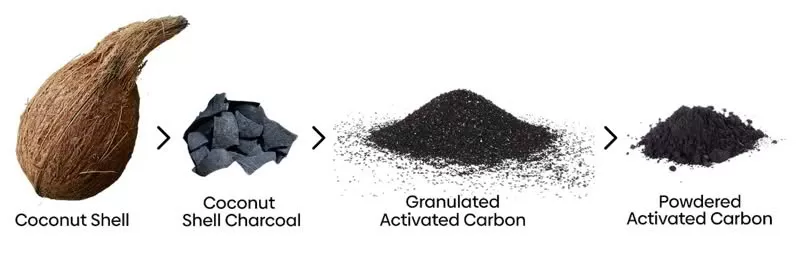
Indonesia, holding its place as one of the planet’s foremost coconut cultivators, inherently possesses an advantage within the charcoal supply network. A profusion of raw material, coupled with well-honed manufacturing capabilities, positions Coconut Charcoal Indonesia as a primary commodity within global commerce. Discerning the subtle specifics of this particular market proves absolutely vital for any prospective exporter.
The Strategic Advantage of Coconut Charcoal Indonesia
Distinctive characteristics set Coconut Charcoal Indonesia apart, propelling its global allure. It presents a heightened calorific density compared to conventional wood charcoal, yielding more fervent, uniform heat. Furthermore, its minimal ash content, consistently below 2.5%, alongside negligible smoke production, renders it supremely suited for specialized applications. Think shisha or hookah use, and the manufacture of superior barbecue briquettes. The material’s ecological benefit, its genesis from what would otherwise be agricultural refuse, deeply connects with environmentally aware consumers and businesses globally. This dedication to ecological stewardship affords a substantial competitive edge within the global economy.
Indonesia’s sprawling coconut groves guarantee an unfailing, steady provision of raw material. This factor becomes paramount for any large-scale export venture. Key provinces such as Sulawesi, Sumatra, and Java serve as central hubs for coconut farming and subsequent charcoal creation. They present various sourcing avenues for those looking to export. Cultivating robust affiliations with local producers is indispensable for securing consistently high-grade supplies.
Navigating Essential Regulatory Frameworks for Export
To successfully export coconut charcoal from Indonesia demands an acute comprehension of both domestic and international statutes. Exporters must obtain a range of permits and official mandates from Indonesian governmental bodies, specifically the Ministry of Trade and the Directorate General of Customs and Excise. Critical paperwork, including a Business Identification Number (NIB), an Export Registration Number (API), and a Phytosanitary Certificate issued by the Ministry of Agriculture, stands as mandatory for legal adherence. Neglecting these stipulations can precipitate considerable holdups and fiscal penalties, disrupting the entire logistical chain.
Nations receiving these goods also impose their distinct import regulations. These often encompass particular labeling stipulations, quality accreditations, and declarations for customs. Many European Union member states, for example, insist upon conformity with REACH guidelines for chemical substances, even concerning natural products. Thoroughly investigating and understanding these precise mandates for chosen markets constitutes a crucial preparatory export undertaking. This ensures unimpeded customs passage upon consignment arrival.
Ensuring Quality and Sourcing for Premium Coconut Charcoal Indonesia
The caliber of Coconut Charcoal Indonesia directly influences its market valuation and desirability. The manufacturing cycle commences with the careful selection of mature coconut shells. These then undergo carbonization within precisely managed kilns. This charring process profoundly affects the final product’s fixed carbon content, its moisture levels, and its overall density. Reputable vendors routinely employ advanced pyrolysis methods. Their aim: achieving peak burning attributes and remarkable purity.
Exporters absolutely must establish stringent quality assurance protocols across all sourcing and production stages. This involves routine laboratory examinations for moisture content (ideally kept below 5%), ash content (under 2.5%), volatile matter, and fixed carbon (typically exceeding 70%). Aligning with suppliers who hold international certifications, such as ISO 9001 for quality administration, offers an added layer of confidence. Diligent vetting of prospective suppliers, encompassing site visits and sample scrutinies, proves essential. This guarantees an unvarying product standard for every consignment of Coconut Charcoal Indonesia.
Strategic Logistics and Global Distribution for Exporting Coconut Charcoal
Streamlined logistical arrangements are fundamental to any profitable export coconut charcoal operation. Packaging serves a paramount function, safeguarding the product during transit and fulfilling purchaser specifications. Standard encasements include internal plastic pouches to ward off moisture ingress, followed by robust master cartons or polypropylene (PP) woven sacks, frequently placed on pallets for simplified handling. Lucid, precise labeling, providing product details, country of origin, and handling instructions, is obligatory for international dispatch.
Ocean freight remains the most prevalent and economically sound method for conveying large volumes of coconut charcoal. This involves the utilization of 20-foot or 40-foot shipping containers. Selecting the appropriate Incoterms (e.g., FOB, CIF) holds profound importance; these terms delineate the responsibilities and risks shared between buyer and seller. Engaging proficient freight forwarders, particularly those specializing in Indonesian exports and categorized dangerous goods (charcoal can fall into this category due to self-heating potential), is strongly advisable. Such experts capably manage port procedures, customs clearance, and vessel timetabling. This ensures punctual, secure delivery from major Indonesian harbors, including Tanjung Priok (Jakarta) or Surabaya.
Identifying Key Markets and Demand for Coconut Charcoal Indonesia
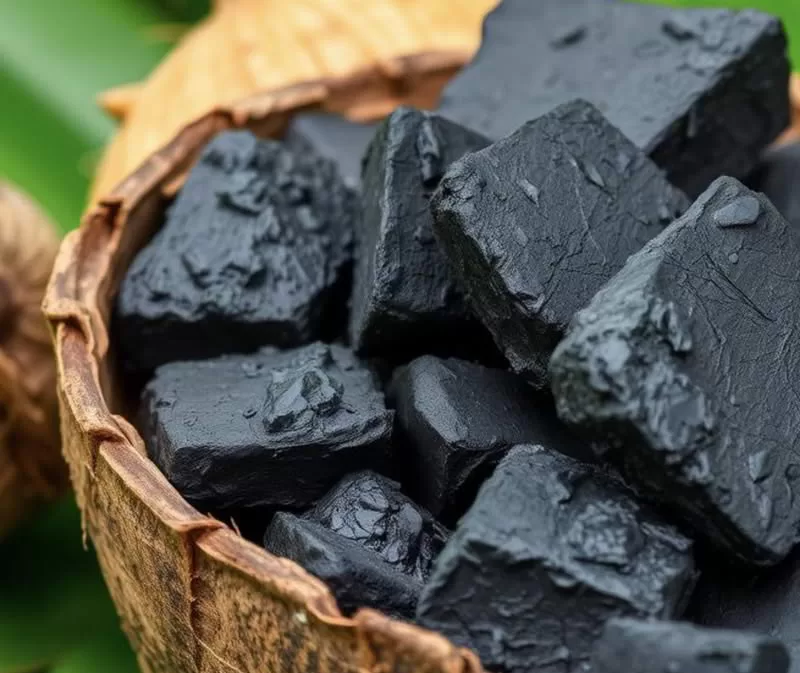
Grasping global market dynamics is vital for maximizing export opportunities. The foremost markets for Coconut Charcoal Indonesia encompass the Middle East (notably Saudi Arabia, UAE) for shisha applications, Europe (Germany, UK, Netherlands) for premium barbecue, and increasingly, North America and East Asia. Market surveys should pinpoint exact product specifications, preferred packaging, and pricing sensitivities within these locales. For instance, the shisha sector demands specific cube or finger configurations, whereas BBQ markets favor briquettes or lump charcoal.
A rising worldwide focus on environmental responsibility persistently fuels the appetite for alternative charcoals. This trend positions Coconut Charcoal Indonesia advantageously against conventional wood-derived charcoal. Exporters ought to diligently track consumption patterns, competitor offerings, and evolving trends. This allows them to refine market penetration blueprints and maintain a competitive edge. Crafting a compelling marketing blueprint, one that underscores the singular merits and sustainable origins of Indonesian coconut charcoal, can considerably augment its market acceptance.
Conclusion
The exportation of Coconut Charcoal Indonesia presents a highly promising prospect for enterprises equipped to unravel its inherent intricacies. Triumph hinges upon a scrupulous methodology for regulatory adherence, exacting quality control, efficient logistical planning, and a nuanced comprehension of international market imperatives. By championing sustainable sourcing, conforming to demanding production benchmarks, and collaborating with dependable logistics partners, exporters can forge a sturdy presence within the global coconut charcoal sector. The distinct advantage afforded by Indonesian resources, when combined with an unyielding pursuit of excellence, creates the pathway for a thriving, enduring export endeavour. A meticulously constructed strategy, spanning from initial sourcing to final delivery, will assure unwavering quality and engender market contentment. This, in turn, will solidify Indonesia’s standing as a premier global supplier.