Coconut shell charcoal presents itself as a multifaceted substance, reaching into industries, residences, and ecological preservation initiatives. Its singular attributes, notably elevated carbon concentration and renewability, establish it as a superior substitute for conventional charcoal origins. An appreciation of the diverse employments of coconut shell charcoal throws light on its significance in a sustainable trajectory. This discourse shall investigate the numerous implementations of coconut shell charcoal, elucidating its stature as a remarkable asset.
Upon completion of this discourse, comprehension shall be attained regarding the manifold applications of coconut shell charcoal, encompassing its ecological and fiscal merits, alongside a comparative analysis with alternative charcoal categories. Exploration will span from industrial utilizations to household applications, thereby affording a holistic vantage on the burgeoning renown of coconut shell charcoal.
The Production Process of Coconut Shell Charcoal
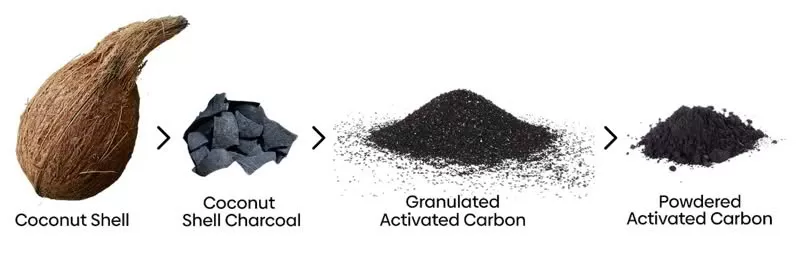
The genesis of coconut shell charcoal lies in the procurement of coconut shells, an adjunct of coconut harvesting. These shells undergo a carbonization procedure, involving thermal treatment within a diminished-oxygen milieu. This intervention expels dampness and transient constituents, yielding a carbon-dense charcoal matter. The attributes of the resultant commodity hinge substantially upon the carbonization modus operandi. As an illustration, contemporary pyrolysis methodologies are capable of generating coconut shell charcoal exhibiting a fixed carbon proportion surpassing 80%, denoting a substantial elevation relative to conventional techniques. Meticulous modulation of temperature and atmospheric conditions guarantees curtailed ash content and optimal robustness. The outcome manifests as a premium, ecologically sound charcoal.
Industrial Applications: Activated Carbon Production
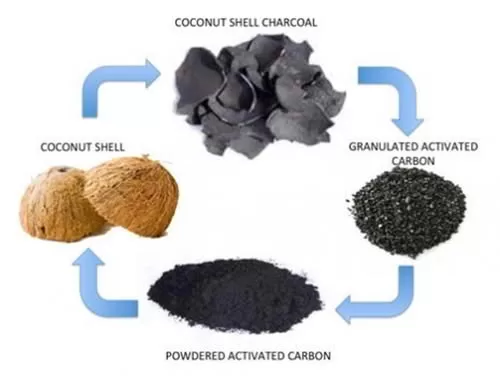
A principal industrial deployment of coconut shell charcoal resides in the fabrication of activated carbon. Activated carbon constitutes a remarkably porous substance, boasting an expansive superficial expanse, spanning from 500 to 1500 square meters per gram. This substantial superficial expanse renders it an exceptional adsorbent, adept at sequestering a spectrum of entities. The methodology entails supplementary refinement of coconut shell charcoal so as to augment its porosity. Chemical activation, leveraging agents such as steam or phosphoric acid, engenders an intricate matrix of internal pores, thereby precipitating a marked escalation in superficial expanse. Activated carbon originating from coconut shell charcoal sees application in water refinement, aerial filtration, and assorted chemical operations. For instance, numerous municipal water processing installations employ activated carbon sieves fashioned from coconut shell charcoal so as to eliminate contaminants, assuring potable and secure water.
Water Purification: A Key Environmental Application
Activated carbon predicated upon coconut shell charcoal assumes a pivotal function within water refinement configurations. Its porous architecture efficaciously scavenges pollutants, inclusive of chlorine, sediment, volatile organic compounds (VOCs), and extraneous impurities. Numerous domestic water purification devices integrate activated carbon receptacles formulated from coconut shell charcoal. These purification devices exhibit the capacity to eradicate upwards of 99% of chlorine and substantially diminish the prevalence of lead and supplementary heavy metals. Within the ambit of industrial effluent processing, activated carbon facilitates the sequestration of dyes, pesticides, and pharmaceuticals, thereby forestalling ecological detriment. Scholarly inquiries have corroborated that the adoption of activated carbon sourced from coconut shell charcoal is capable of curtailing the concentration of select pollutants within effluent by in excess of 90%. This characteristic renders it an invaluable asset for upholding water integrity and safeguarding aquatic ecosystems.
Air Filtration: Improving Indoor Air Quality
Transcending water refinement, activated carbon rooted in coconut shell charcoal extends its utility to encompass aerial filtration configurations. It capably adsorbs odors, gaseous emanations, and airborne particulate matter, thereby ameliorating the caliber of indoor aerial environments. Aerial purifiers furnished with activated carbon sieves are routinely deployed within domiciles, workplaces, and medical facilities. These sieves manifest the capacity to expunge volatile organic compounds (VOCs) discharged from paints, sanitizing merchandise, and allied origins. Select advanced aerial purifiers amalgamate activated carbon sieves in conjunction with HEPA sieves so as to capture both particulate matter and gaseous pollutants. Within industrial contexts, activated carbon sieves are integrated within ventilation architectures so as to extricate hazardous effluvia and gaseous discharges, thus shielding the well-being of personnel. The integration of coconut shell charcoal within aerial filtration proves notably advantageous within urban vicinities grappling with elevated tiers of aerial contamination.
Metallurgical Applications: Gold Recovery
Coconut shell charcoal secures a discrete application within the metallurgical domain, notably in gold recuperation methodologies. Activated carbon procured from coconut shell charcoal finds utility within carbon-in-pulp (CIP) and carbon-in-leach (CIL) procedures aimed at extracting gold from ore. The substantial superficial expanse and robust adsorption proclivities of the activated carbon empower it to selectively affix to gold ions within the leaching solution. The gold-laden carbon is subsequently segregated from the pulp, and the gold is reclaimed via a methodology denoted as elution. Coconut shell charcoal garners preference vis-à-vis alternative carbon provenance due to its resilience and impedance to attrition, thereby curtailing carbon dissipation during the process. This modus operandi enjoys widespread adoption within gold mining enterprises spanning the globe, thereby contributing to efficacious and economical gold extraction. Select gold mining ventures document that the deployment of activated carbon predicated upon coconut shell charcoal precipitates an augmentation in gold recuperation proportions by upwards of 5% relative to alternative activated carbon derivations.
BBQ and Cooking Fuel: A Sustainable Option
Coconut shell charcoal is accruing recognition as a sustainable substitute for conventional wood charcoal within the contexts of barbecuing and culinary practices. It engenders diminished smoke and exhibits cleaner combustion characteristics vis-à-vis wood charcoal, thereby mitigating the emission of detrimental pollutants. Briquettes of coconut shell charcoal are distinguished for their prolonged combustion duration and uniform thermal emanation, rendering them ideally suited for grilling applications. A multitude of consumers are transitioning toward coconut shell charcoal in light of its ecological merits and superlative performance attributes. A collection of scholarly investigations has substantiated that briquettes of coconut shell charcoal yield downwards of 75% less smoke in contrast to briquettes of wood charcoal. Furthermore, they demonstrate the capacity to combust for a duration extending up to threefold, thereby affording a more efficacious and economical culinary encounter. The adoption of coconut shell charcoal as a culinary fuel bolsters sustainable methodologies and mitigates deforestation.
Agricultural Uses: Soil Amendment and Fertilizer
Within the sphere of agriculture, coconut shell charcoal, frequently manifesting in the guise of biochar, serves as both a soil amendment and a fertilizer. Biochar is synthesized via the pyrolysis of coconut shell charcoal under discrete stipulations so as to augment its soil-enhancing attributes. It refines soil architecture, moisture retention capabilities, and nutrient bioavailability. The introduction of biochar into soil matrices possesses the capacity to elevate crop yields and attenuate the necessity for synthetic fertilizers. Biochar additionally aids in carbon sequestration, effectively extracting carbon dioxide from the atmosphere and sequestering it within the soil milieu. Scholarly inquiries have evinced that the utilization of biochar predicated upon coconut shell charcoal can precipitate an augmentation in crop yields ranging from 10-50%, contingent upon the prevailing soil category and crop species. It likewise diminishes soil acidity and optimizes the efficiency of fertilizer deployment. The agricultural implementation of coconut shell charcoal fosters sustainable agronomic practices and enriches soil robustness.
Energy Production: Renewable Fuel Source
Coconut shell charcoal avails itself as a renewable origin of fuel for energy generation. It lends itself to direct combustion within stoves and furnaces for the purpose of thermal generation, alternatively, it can undergo gasification to engender syngas, which is subsequently deployable for electrical generation. The recourse to coconut shell charcoal as a fuel curtail dependence upon fossil fuels and attenuates greenhouse gas emissions. Within select locales, coconut shell charcoal finds employment within diminutive power generation installations catering to the electrical requisites of local communities. These installations harness gasification technologies to transmute coconut shell charcoal into syngas, which is subsequently combusted within generators. The resultant energy is both pristine and sustainable, affording a dependable power provenance for rural sectors. The incorporation of coconut shell charcoal within energy generation sustains energy autonomy and diminishes the carbon footprint.
Crafts and Art: Decorative and Functional Items
Transcending its industrial and pragmatic applications, coconut shell charcoal extends its utility to encompass artisanal and artistic endeavors. Its distinctive textural attributes and chromatic properties render it an enticing substance for the fabrication of ornamental and utilitarian articles. Artisans harness coconut shell charcoal for the creation of sculptures, adornments, and domestic accoutrements. The charcoal lends itself to carving, polishing, and pigmentation so as to engender intricate designs. Artifacts crafted from coconut shell charcoal enjoy popularity as souvenirs and gifts, underscoring the versatility inherent to this substance. Within select cultural contexts, coconut shell charcoal is integrated within traditional artistic modalities, exemplified by charcoal sketches and paintings. The profound ebony hue of the charcoal affords a striking contrast, thereby engendering visually arresting artworks. The incorporation of coconut shell charcoal within artisanal and artistic practices bolsters local artisans and propagates cultural patrimony.
The Environmental Benefits of Using Coconut Shell Charcoal
The adoption of coconut shell charcoal extends myriad ecological merits in contrast to conventional charcoal origins. It embodies a renewable resource, derived from a byproduct of the coconut sector, thereby curtailing wastage and fostering sustainability. The production of coconut shell charcoal entails a carbon-neutral procedure, predicated upon the premise that the carbon dioxide liberated during combustion is counterbalanced by the carbon dioxide assimilated by coconut arboreal specimens throughout their developmental trajectory. This dynamic aids in the mitigation of climatic perturbations and the curtailment of greenhouse gas emissions. Furthermore, coconut shell charcoal exhibits cleaner combustion characteristics vis-à-vis wood charcoal, thereby engendering diminished smoke emissions and fewer deleterious pollutants. This circumstance ameliorates aerial integrity and attenuates the incidence of respiratory ailments. The adoption of coconut shell charcoal underpins a circular economic paradigm, effectively transmuting wastage into a valuable resource and fostering ecological stewardship.
Sourcing and Purchasing Coconut Shell Charcoal: What to Look For
When procuring and acquiring coconut shell charcoal, the prioritization of several determinants assumes paramount significance so as to assure both caliber and sustainability. Prospective purchasers ought to seek out suppliers who espouse sustainable harvesting protocols and ecologically benign production methodologies. Scrutiny of the carbon and ash concentrations inherent to the charcoal is critical, as these metrics serve as bellwethers of its intrinsic caliber. Elevated carbon concentrations coupled with diminished ash concentrations signify a superior commodity. Consideration ought to be accorded to the acquisition of coconut shell charcoal from certified purveyors who pledge allegiance to international benchmarks delineating environmental and social accountability. Numerous entities extend certifications validating sustainable charcoal production, thereby furnishing assurances that the charcoal is synthesized in accordance with ethical and ecologically conscientious precepts. Through the conscientious procurement of coconut shell charcoal, consumers can champion sustainable practices and contribute substantively to an environmentally conscious trajectory. Scrutinize the charcoal supply when acquiring and ascertain the presence of a consistent and dependable charcoal supply obtainable from your vendor.
The Future of Coconut Shell Charcoal: Innovations and Trends
The trajectory of coconut shell charcoal portends well, characterized by sustained innovations and emergent trends augmenting its applications and resultant benefits. Researchers are assiduously exploring novel methodologies for augmenting the intrinsic attributes of coconut shell charcoal, such as augmenting its superficial expanse and fortifying its adsorption proclivities. These progressive strides shall further amplify its efficacy across water purification, aerial filtration, and corollary applications. The integration of coconut shell charcoal within bioenergy generation is likewise accruing impetus, spurred by the evolution of nascent technologies geared toward its transmutation into biofuels and alternative renewable energy matrices. Concomitant to the escalating cognizance of its ecological merits, the solicit for coconut shell charcoal is poised for expansion, thereby catalyzing incremental innovation and capital infusion into this sustainable substance. Consumers can anticipate the pervasive integration of coconut shell charcoal across a broader spectrum of products and applications, thereby contributing substantively to a trajectory characterized by sustainability and ecological rectitude.
In summation, coconut shell charcoal constitutes a versatile and sustainable substance, boasting a plethora of applications across a spectrum of industries. From water refinement and aerial filtration to metallurgy and agriculture, its singular attributes render it an invaluable asset. The espousal of coconut shell charcoal underpins ecological sustainability and curtails dependence upon conventional, less ecologically benign substances. Its salient role in renewable energy generation and soil amelioration further accentuates its pivotal status in forging a trajectory characterized by heightened sustainability.
Example of Coconut Shell Charcoal Products
Coconut Shell Charcoal is a premium, eco-friendly charcoal made from 100% natural coconut shells. Known for its high carbon content, long burn time, and low smoke emission, it is ideal for BBQ grilling, shisha/hookah use, and industrial fuel. The charcoal burns cleanly with minimal ash, leaving no odor or chemical residue.
Technical Details
- Carbon Content: > 80%
- Moisture: < 8%
- Ash: < 3%
- Calorific Value: 7,000 – 7,500 kcal/kg
- Burn Time: 2–3 hours
- Shape: Cube / Hexagon / Pillow (customizable)
Key Features
- Made from natural, renewable coconut shells
- High calorific value and long-lasting heat
- Low ash and almost smokeless combustion
- No chemical additives or binders
- Odorless and safe for indoor use
- Uniform shape (cube, hexagon, or pillow) – easy to light and handle
To Inquiry about eBiopex Coconut Shell Charcoal, please contact us below;